Guide · Bathroom tiling
Bathroom tiles: marble, porcelain or ceramic?
The three materials look similar in a showroom and behave very differently on a wall or floor for the next twenty years. This is how we explain the choice to customers across Oxfordshire and Wiltshire.
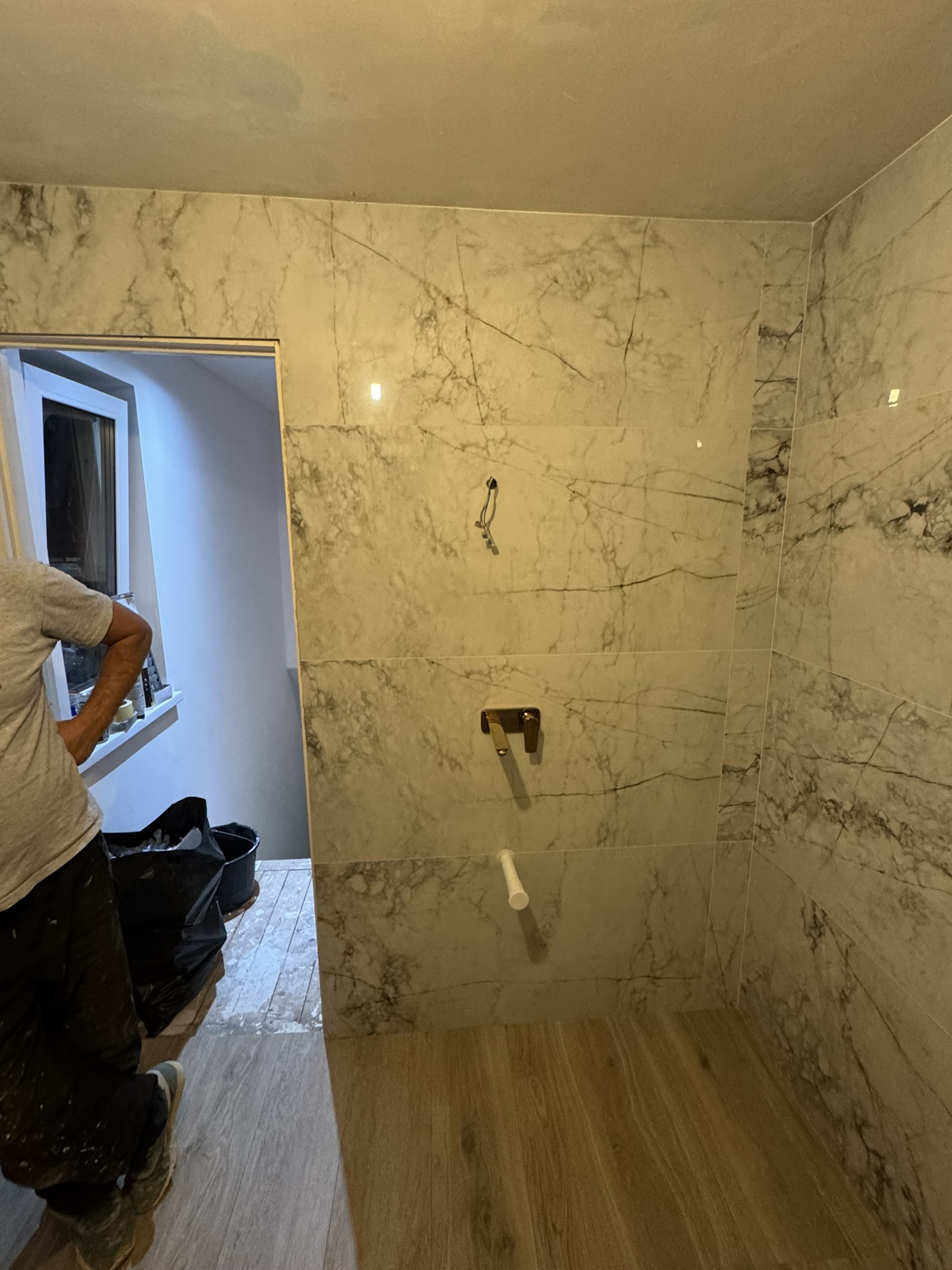
Marble: natural stone, and it behaves like it
Every marble tile is cut from a slab, so no two are the same and the veining runs through the material rather than being printed on top. That is the appeal. It is also softer and more porous than porcelain, so it needs sealing when it is fitted, re-sealing every year or two, and cleaning with a pH-neutral product. Acidic cleaners, limescale removers and some shampoos will dull or etch the surface.
Fitting takes longer too. Tiles are laid out dry first so the veins flow, cuts are made with a wet saw, and a white or light adhesive is used so nothing shows through. In our marble bathroom the wall and floor slabs were matched across the whole room, which is a day of planning before the first tile goes on.
Porcelain: the practical choice for floors and showers
Porcelain is a fired clay body pressed so densely that it absorbs almost no water. It resists stains and scratches, it does not need sealing, and it comes in large formats and convincing marble, stone and wood effects. For a shower floor, a family bathroom floor or anywhere that gets hard daily use, it is usually what we recommend.
The trade-off is that it is hard to cut and unforgiving of an uneven wall or floor. Large-format porcelain shows every lump in the substrate, so the preparation, levelling and tanking underneath matter as much as the tile on top.
Ceramic: lighter, cheaper, best kept to walls
Ceramic tiles are fired at a lower temperature, so they are lighter, easier to cut and less expensive. On walls that is all upside. On floors the glaze can wear and chip under grit and heavy traffic, so we tend to keep ceramic to walls, splashbacks and cloakrooms and use porcelain underfoot.
Pattern and layout change the job as much as the material
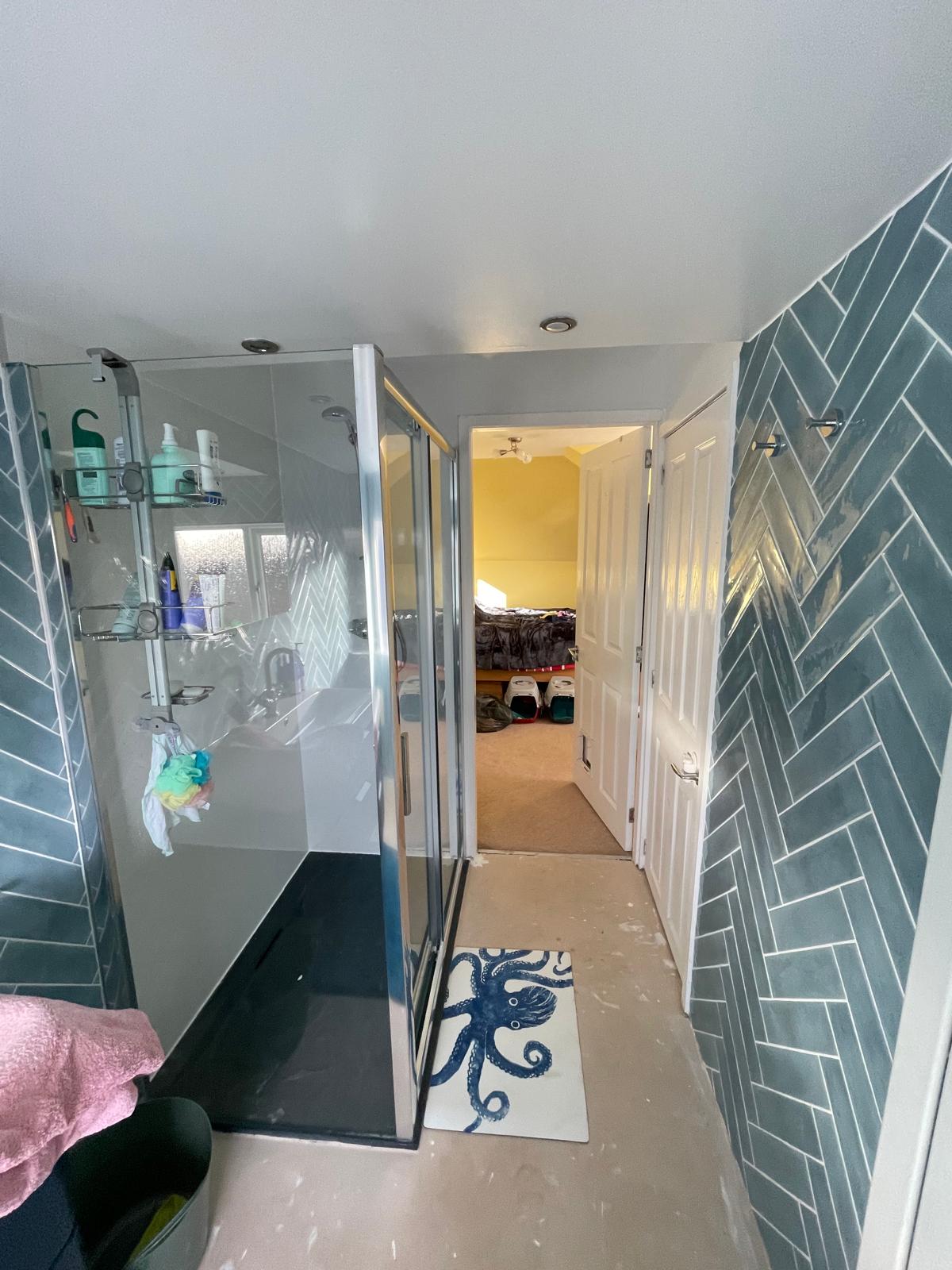
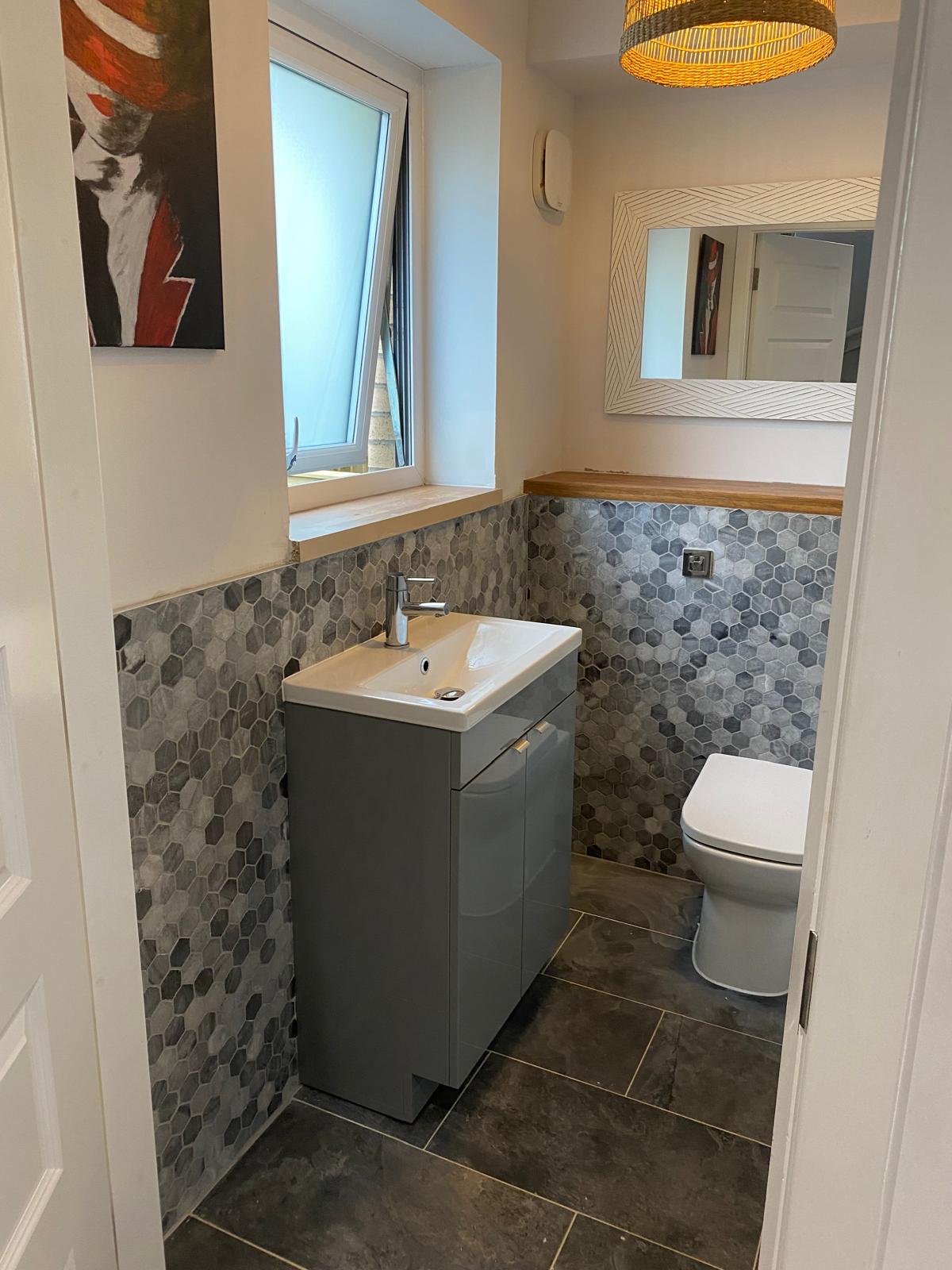
Herringbone, hexagon mosaic, patterned star tiles and feature walls all appear in our recent work, and each one adds cuts, setting-out time and waste. A straight stack of large tiles is the quickest to fit. Herringbone on a wall roughly doubles the cutting. Mosaic sheets are fast to lay but slow to grout and clean. None of this should put you off a pattern you love, it just belongs in the quote from the start.
Six things to settle before tiles are ordered
- Slip resistance on floors. Polished porcelain and honed marble are slippery when wet. Look for a textured or matt finish for shower floors and wet rooms.
- Waterproofing behind the tile. Showers and wet rooms are tanked before tiling. Tiles and grout are not the waterproof layer.
- Grout colour and type. A contrasting grout turns a plain tile into a pattern. Epoxy grout resists staining but costs more to fit.
- Underfloor heating. Porcelain and stone conduct heat well. Confirm the system before the floor build-up is decided.
- Order extra. Allow around 10 to 15 percent over the measured area for cuts and breakages, more for diagonal or herringbone layouts.
- Trims, niches and edges. Metal trims, mitred edges and shower niches are decided before tiling starts, not after.
Recent work
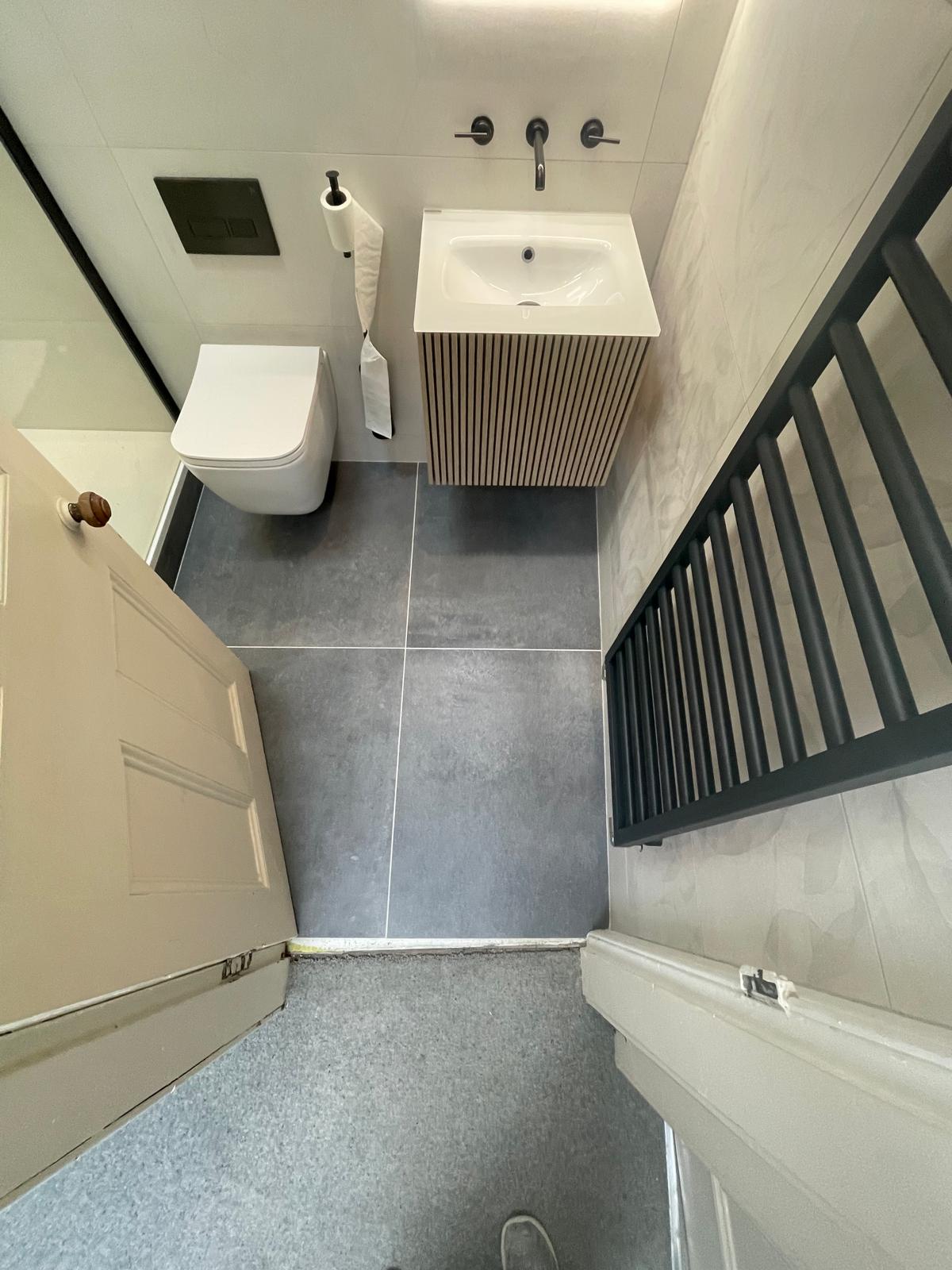
Tiling from our recent bathrooms
Frequently asked questions
Is marble a good idea in a family bathroom?
It can be, as long as everyone knows it needs sealing and gentle cleaning. If the room gets heavy daily use and nobody wants the upkeep, a marble-effect porcelain gives the look with far less care.
Does tile size or pattern change the fitting price?
Yes. Large-format porcelain needs a very flat substrate and careful handling, and patterns such as herringbone or hexagon mosaic mean more cuts and more time. That is why we quote each room after seeing it, not from a price per square metre.
Can you tile over existing tiles?
Sometimes on walls, if the old tiles are sound and the extra thickness does not cause problems at doors, fittings and trims. In most full renovations we strip back to the substrate, because that is when hidden pipework and sub-floor problems get found and fixed.
Get a fixed quote
Send us a photo of the room and the tiles you like. We will tell you honestly what will work, then give one fixed price for the whole job.